


Internal mobility is one of the most misunderstood dynamics in modern organizations. JR Keller brings the empirical lens that most leaders never get. His research at Cornell University’s ILR School unpacks how hiring decisions are made, how managers balance team performance with talent development, and why employees often misinterpret the signals around opportunity. This episode moves past slogans and gets into the real mechanics: incentives, culture, language, and the behavioral patterns that shape who advances and who doesn’t.
In this episode we talk about internal mobility, talent development, hiring decisions, HR management, employee advancement, organizational culture, AI in HR, career progression, talent acquisition, leadership.
Key Takeaways
JR’s research shows that mobility isn’t blocked by a lack of roles. It’s blocked by the human calculus managers make when deciding whether to release talent. Managers optimize for stability and predictability, and the system often rewards that behavior. Until incentives align with mobility, even the best programs stall.
Lateral moves carry more long-term value than most organizations acknowledge. JR’s empirical work reveals that sideways transitions often generate broader skill acquisition, better visibility, and stronger future promotion velocity. Companies that treat lateral movement as legitimate progression see healthier internal pipelines and more resilient talent.
AI has a role, but not the one most leaders assume. JR frames it as a mechanism to surface overlooked skills, reduce noise in matching, and create visibility into internal pathways. Technology can correct informational gaps, but it cannot override psychological safety or managerial trust. Culture decides whether mobility sticks.
Employees and organizations share responsibility for mobility outcomes. JR emphasizes that employees must actively navigate their own careers while organizations must remove structural friction. When both sides commit to transparency, aligned incentives, and meaningful development pathways, internal mobility becomes a strategic advantage instead of a persistent frustration.
We partner with institutions that do the work. Cornell ILR has been a cornerstone of the HR and labor community for decades. Through its partnership with You Should Know and WRKdefined, ILR supports professionals who want to deepen their understanding of work, organizations, and career growth.
Learn more about ILR’s Graduate Degree Programs
Cornell's ILR School offers exceptional HR master's programs that combine rigorous academics with practical application. We offer programs designed for professionals with 2-5 years of experience and for executives with 8+ years of HR experience. Engage with world-renowned faculty, connect with HR executives, and become part of Cornell's prestigious alumni network. Take your career and organization to the next level with a Master’s from Cornell.
Chapters:
03:00 Research Focus: Internal Mobility and Hiring Decisions
05:52 Challenges in Internal Mobility: The Role of Managers
08:37 Talent Hoarding: Understanding Managerial Behavior
11:56 The Value Proposition of Promoting Talent
14:51 Incentivizing Managers to Promote Talent
17:46 Cultural Shifts for Internal Mobility
20:48 The Future of Talent Mobility and AI’s Role
24:21 Empowering Employees Through Technology
25:21 The Role of AI in Job Matching
27:03 Balancing Skills and Development
28:03 Ownership of Internal Mobility
29:34 The Disconnect in Talent Acquisition
32:17 The Importance of Onboarding for Internal Hires
34:23 Lateral Moves as Career Advancement
38:46 Redefining Promotions and Career Growth
Featured Guest
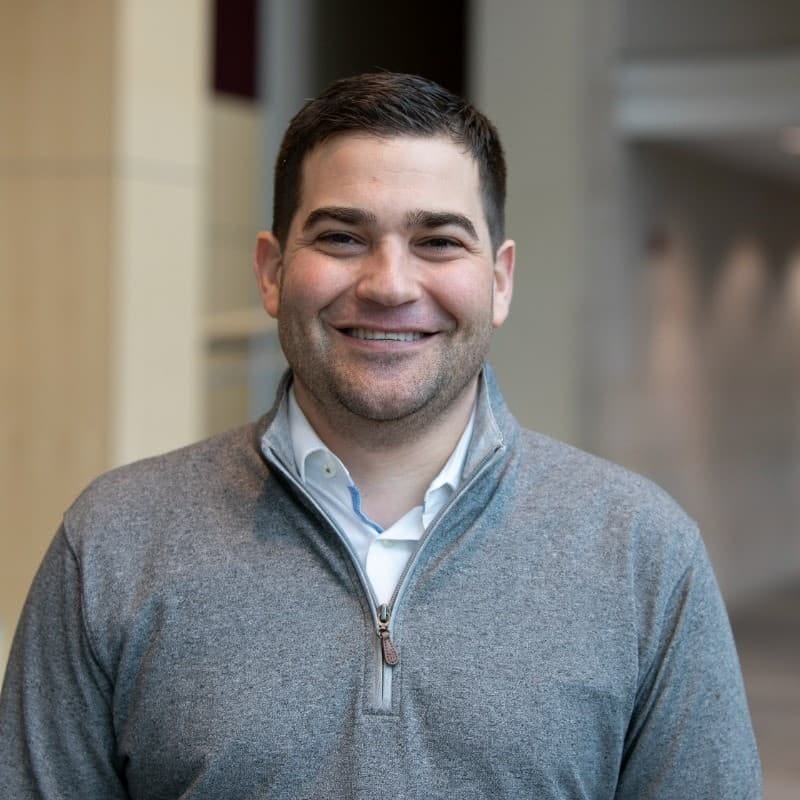
JR Keller, Faculty Director, Executive Master of Human Resource Management (EMHRM)
LinkedIn: https://www.linkedin.com/in/jrkeller/
Cornell ILR EMHRM: https://www.ilr.cornell.edu/
Cornell ILR Latest Research: https://www.ilr.cornell.edu/faculty-and-research
Hosts
William Tincup: LinkedIn: https:// linkedin.com/in/tincup
Ryan Leary:LinkedIn:htps://linkedin.com/in/ryanleary


